How to Remove Stubborn Grease from Cabinets
Step-by-step methods for cleaning greasy kitchen cabinet surfaces
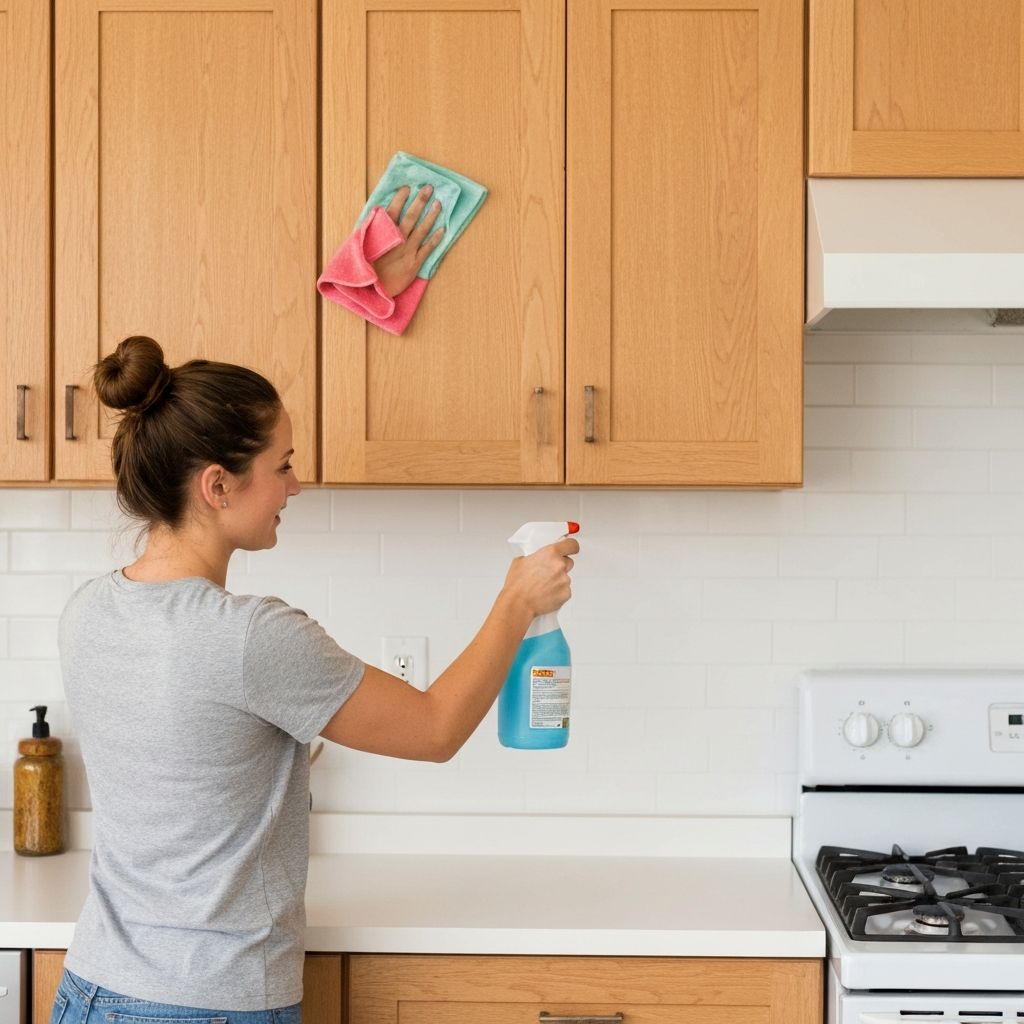
Tackle the Sticky Problem
Greasy cabinet buildup is one of the most common and frustrating kitchen problems. This guide provides effective solutions for all cabinet types without causing damage.
Cooking splatters and airborne grease create a sticky film on cabinet surfaces that attracts dust and looks terrible. Regular cleaners often just smear it around. Here's how to actually remove it.
Understanding Cabinet Grease Buildup
When you cook, especially with oil or at high heat, microscopic grease particles become airborne. They settle on all kitchen surfaces, including cabinet fronts. Over time, this builds into a sticky, discolored film that:
- Attracts dust and dirt
- Darkens cabinet color
- Feels tacky to the touch
- Becomes harder to remove the longer it sits
What You'll Need
- Dish soap (grease-cutting formula)
- White vinegar
- Baking soda
- Warm water
- Microfiber cloths (several)
- Soft sponge or cloth
- Spray bottle
- Small bowl
- Old toothbrush (for details and edges)
Method 1: Dish Soap Solution (Mild to Moderate Grease)
Step 1: Mix Solution
Combine 2 tablespoons dish soap with 2 cups warm water in spray bottle. Use grease-cutting dish soap like Dawn.
Step 2: Spray and Wait
Spray solution generously on greasy cabinet surfaces. Let it sit for 5-10 minutes to break down the grease. Don't let it dry.
Step 3: Wipe Clean
Wipe with damp microfiber cloth using circular motions. Flip to clean side of cloth frequently. Rinse and wring out cloth as needed.
Step 4: Dry Thoroughly
Dry immediately with clean cloth to prevent water spots and warping, especially on wood cabinets.
Method 2: Vinegar Spray (Moderate Grease)
Step 1: Create Vinegar Solution
Mix equal parts white vinegar and warm water in spray bottle (1:1 ratio).
Step 2: Apply and Scrub
Spray solution on cabinets. Wipe with microfiber cloth or soft sponge. Vinegar cuts through grease naturally without harsh chemicals.
Step 3: Rinse and Dry
Wipe with damp cloth to remove vinegar residue, then dry completely.
Method 3: Baking Soda Paste (Heavy Grease)
Step 1: Make Paste
Mix baking soda with water to create thick paste (3:1 ratio - 3 parts baking soda to 1 part water).
Step 2: Apply to Grease
Apply paste to greasy areas with cloth or fingers. Let sit for 10-15 minutes. The paste absorbs and breaks down the grease.
Step 3: Scrub Gently
Use soft sponge or cloth to scrub in circular motions. The mild abrasiveness of baking soda helps lift stubborn grease without scratching.
Step 4: Clean and Dry
Wipe away paste with damp cloth, rinse, and dry thoroughly.
Special Considerations by Cabinet Type
Wood Cabinets:
Use minimal water and dry immediately. Test cleaning solution in hidden area first. Avoid soaking wood as it can warp or damage finish.
Painted Cabinets:
Be gentle with scrubbing. Harsh abrasives can remove paint. Stick with soft cloths and mild solutions.
Laminate Cabinets:
Most durable option. Can handle more aggressive cleaning, but still avoid excessive water around edges where it can seep under laminate.
Glass-Front Cabinets:
Clean glass separately with vinegar solution for streak-free results. Avoid getting wood frames too wet.
Problem Areas
Cabinet Handles and Knobs
These collect the most grease from hands. Remove hardware if possible and soak in hot soapy water. Scrub with old toothbrush. If can't remove, wrap toothbrush-applied paste around them and scrub well.
Cabinet Edges and Grooves
Use old toothbrush dipped in cleaning solution to get into detailed areas. Grease loves to hide in decorative grooves and panel edges.
Cabinets Above Stove
These get the worst grease exposure. May need to repeat cleaning process 2-3 times for heavy buildup. Consider applying baking soda paste overnight for extremely stubborn grease.
Prevention Tips
- Use exhaust fan when cooking to reduce airborne grease
- Wipe cabinet fronts weekly with damp cloth - quick maintenance prevents major buildup
- Clean up cooking splatters immediately before they dry and harden
- Deep clean cabinets every 3-6 months depending on cooking frequency
- Consider installing a splatter guard near the stove
Solutions for Each User Type
For Homemakers:
Weekly 5-minute wipe-downs prevent the need for intensive scrubbing sessions. Include cabinet fronts in your regular cleaning routine.
For New Cooks/Renters:
Regular maintenance protects your rental deposit. These gentle methods won't damage cabinet finish like harsh chemicals might.
For Efficiency Seekers:
Letting solution sit does the work for you. The 10-minute wait time breaks down grease so it wipes away easily, minimizing actual scrubbing time.