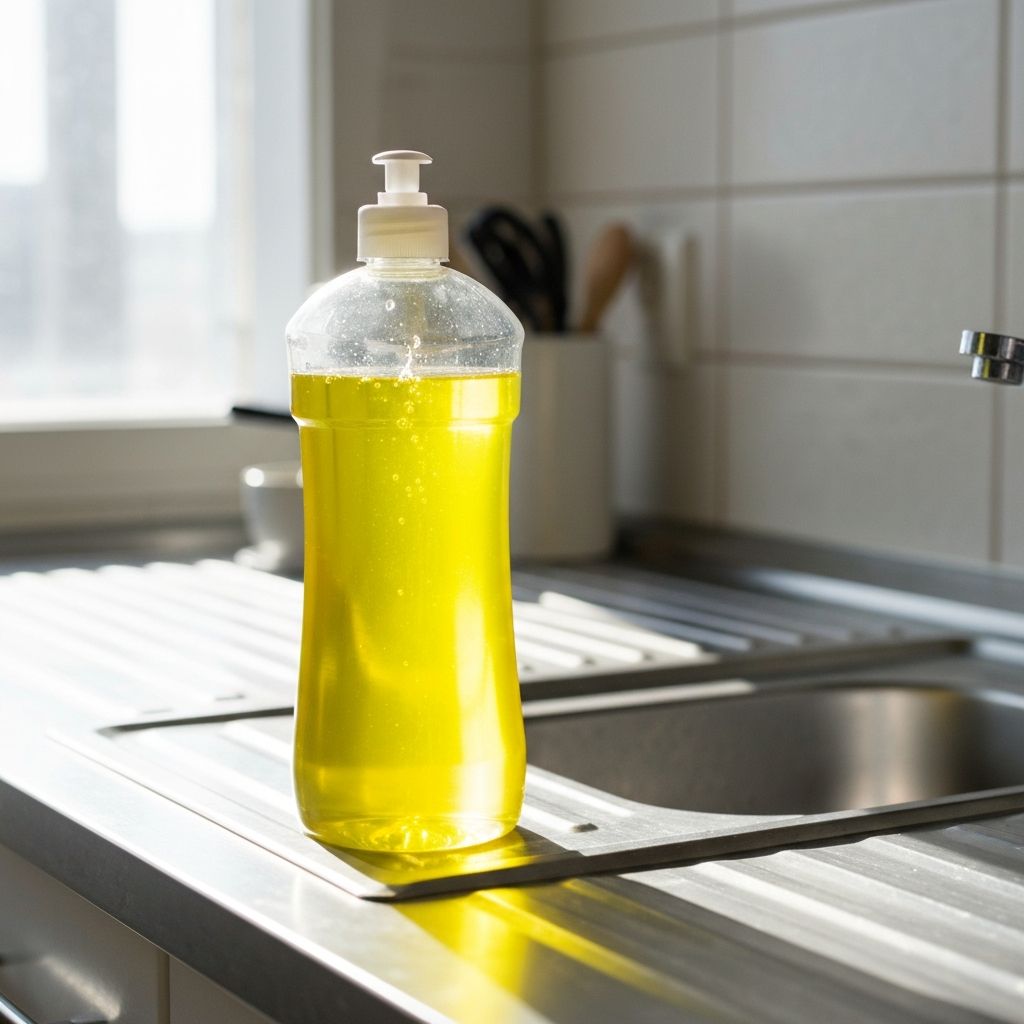
Why Degreasing Power Matters
Not all dish soaps are created equal. Degreasing formulas are specifically designed to break down cooking oils and fats that regular soaps leave behind—the #1 pain point for homemakers and anyone who cooks regularly.
Whether you're dealing with greasy pans from daily cooking or tackling built-up residue on cabinets and range hoods, a quality degreasing dish soap is your frontline defense against kitchen grease.
- Surfactants: Special molecules that attach to both water and oil, allowing grease to be rinsed away instead of just spreading around
- Concentrated Formula: A little goes a long way—one drop can clean an entire sink of dishes with proper water temperature
- pH Balance: Degreasing soaps have alkaline pH levels that naturally break down fatty acids in cooking oils
- Versatility: Works on dishes, cookware, and surfaces—making it a multi-purpose kitchen essential
How to Use for Maximum Effectiveness
For Dishes & Cookware
Use hot water (as hot as your hands can comfortably handle). Add 1-2 drops of degreasing soap to your sponge or directly to greasy items. The heat activates the degreasing agents for maximum effectiveness.
For Kitchen Surfaces
Mix 2-3 drops with warm water in a spray bottle. This creates an effective degreaser for countertops, backsplashes, stovetops, and cabinet fronts.
For Range Hoods & Appliances
Make a stronger solution (1 tablespoon soap per cup of warm water). Apply with a cloth, scrub gently, and rinse with clean water. Repeat for stubborn buildup.
Choosing the Right Degreasing Soap
Not all dish soaps have strong degreasing properties. Check for these specific claims on the packaging.
Concentrated formulas are more economical—you use less per wash and bottles last longer. Look for labels indicating concentration levels.
If you're sensitive to smells or using it for surface cleaning, consider fragrance-free options. Scented versions are nice for hand washing dishes.
Many brands now offer plant-based, biodegradable degreasing soaps that work just as well as conventional formulas without harsh chemicals.
Solving User Pain Points
One product handles dishes AND surface cleaning, cutting through daily cooking grease that makes kitchens look dirty
Makes cleanup easier after cooking, especially when dealing with fried foods or oil-based dishes for the first time
Powerful degreasing means less scrubbing time and fewer cleaning products to buy and store
Common Mistakes to Avoid
Using too much soap: More isn't better—excess soap leaves residue and wastes product. Start with one drop and add more only if needed.
Using cold water: Degreasing soap works best with hot water. Cold water allows grease to solidify instead of washing away.
Not rinsing thoroughly: Soap residue can attract dirt and make surfaces feel sticky. Always rinse completely with clean water.
Mixing with other chemicals: Never mix dish soap with bleach or other cleaners—it can create dangerous fumes or reduce effectiveness.