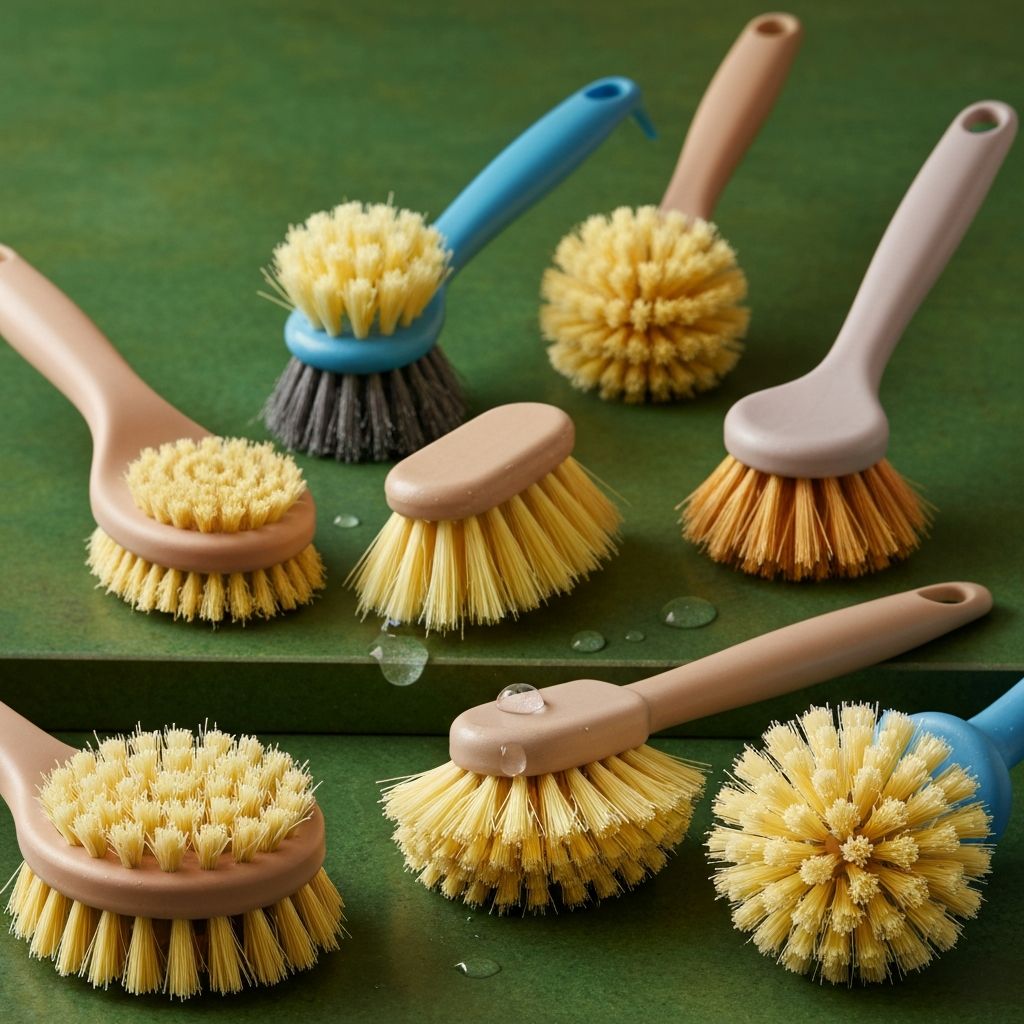
Why You Need Different Brushes
Not all kitchen surfaces are created equal, and neither should your cleaning tools be. Different brushes serve different purposes—from soft bristles for delicate surfaces to stiff brushes for baked-on grime.
Understanding which brush to use where prevents surface damage while ensuring effective cleaning. This knowledge is especially valuable for new cooks learning proper kitchen care and homemakers managing daily cleaning tasks.
- Soft-Bristle Brushes: Perfect for non-stick pans, glassware, and delicate surfaces. Won't scratch but still removes food residue effectively.
- Medium-Bristle Brushes: Ideal for everyday dishes, countertops, and sinks. The most versatile option for general kitchen cleaning.
- Stiff-Bristle Brushes: Best for baked-on grease, oven racks, grills, and heavily soiled pots. Use with caution on delicate surfaces.
- Detail Brushes: Small brushes with angled heads for corners, grout lines, and hard-to-reach areas around faucets and appliances.
How to Choose & Use
For Pots & Pans
Use soft bristles for non-stick cookware, medium bristles for stainless steel, and stiff bristles for cast iron or heavily stained pots. Always test in an inconspicuous area first.
For Countertops & Surfaces
Medium-bristle brushes work well for most countertop materials. Use detail brushes for grout lines and seams where dirt accumulates.
For Appliances
Soft to medium bristles are safe for most appliance surfaces. Use detail brushes for control knobs, vents, and crevices where grease builds up.
Maintenance Tips
After Each Use: Rinse thoroughly with hot water and shake out excess water. Stand upright to air dry completely.
Deep Cleaning: Weekly, soak brushes in warm soapy water or vinegar solution for 10 minutes to remove built-up grease and bacteria.
Replacement: Replace brushes when bristles become splayed, discolored, or start falling out—typically every 3-6 months depending on usage.
Storage: Store in a well-ventilated area, bristles up, to prevent mildew and extend brush life.
Solving Common Pain Points
Having the right brush for each task makes daily cleaning faster and prevents surface damage from using the wrong tool.
Learn which brush protects your cookware investment while effectively removing food residue and grease.
The right brush cuts cleaning time in half by tackling messes effectively on the first pass.