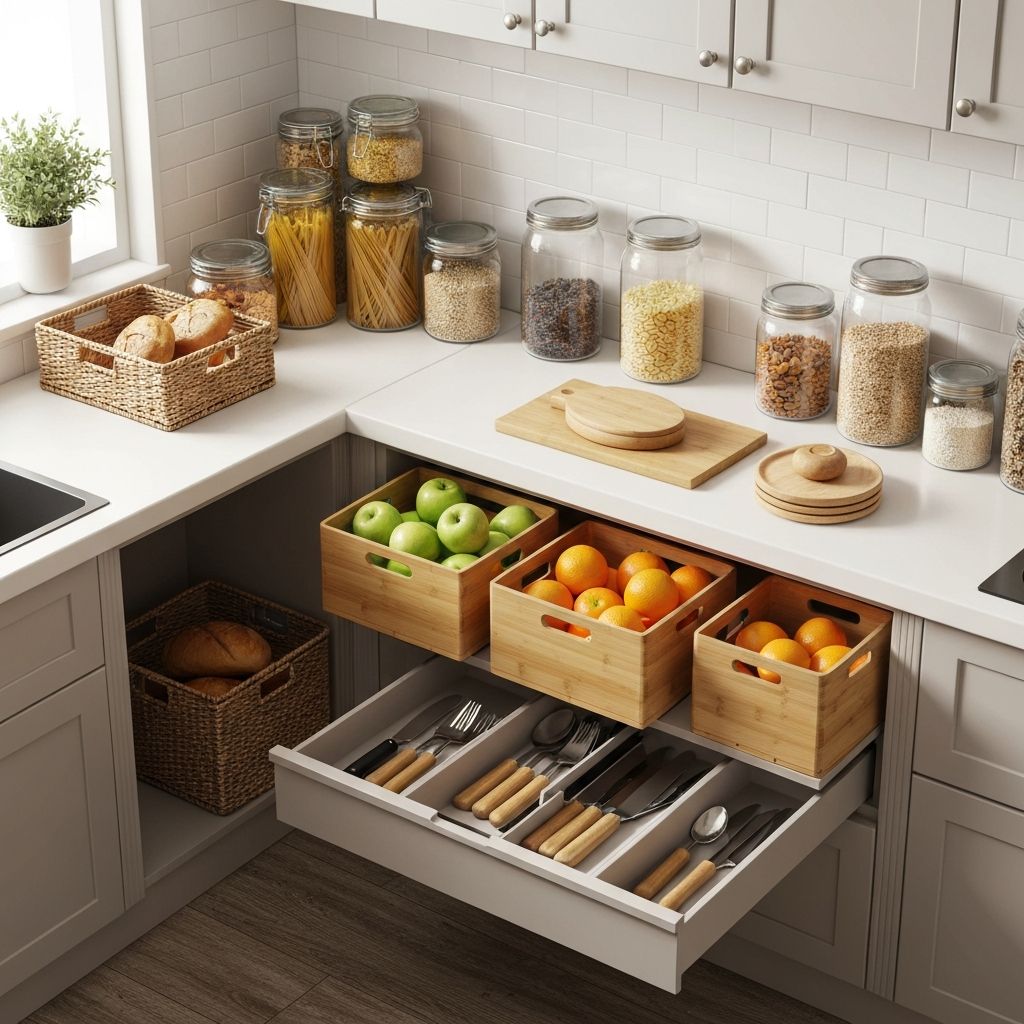
Transform Your Kitchen Organization
Kitchen chaos often starts with poor storage. Clear, properly-sized containers turn cluttered cabinets and overflowing fridges into organized, efficient spaces where you can actually find what you need.
For homemakers managing busy households, renters with limited space, or anyone seeking kitchen efficiency, quality storage containers are a game-changing investment that pays dividends in saved time, reduced food waste, and less stress.
- Maximize Space: Stackable, uniform containers use vertical space efficiently and eliminate wasted gaps between mismatched packages
- Reduce Food Waste: Clear containers show contents and quantities at a glance, preventing forgotten food from expiring
- Keep Food Fresh: Airtight seals protect from moisture, air, and pests—extending shelf life significantly
- Save Money: Buy in bulk and store properly, preventing spoilage and reducing trips to the store
Types of Storage Containers
For dry goods like flour, sugar, rice, pasta, cereal, and snacks. Look for airtight seals and labels or label-friendly surfaces.
- • Square or rectangular shapes maximize shelf space
- • Wide openings make scooping and pouring easy
- • Clear material shows when you're running low
- • Stackable lids reduce clutter
For leftovers, meal prep, cut fruits and vegetables, and opened packages. Prioritize leak-proof seals and materials safe for both fridge and microwave.
- • BPA-free plastic or glass options
- • Modular sizes that fit together like puzzle pieces
- • Dishwasher-safe for easy cleaning
- • Some lids work with multiple container sizes
For batch cooking, frozen fruits/vegetables, and long-term storage. Must withstand temperature extremes without cracking.
- • Freezer-safe materials that won't become brittle
- • Leave headspace for liquid expansion
- • Flat, stackable design maximizes freezer space
- • Label with date and contents for easy identification
Choosing the Right Containers
Glass: Durable, doesn't stain or retain odors, microwave and oven-safe, but heavier and breakable
Plastic: Lightweight, affordable, shatterproof, but can stain and may need replacement over time
Always choose BPA-free options for food safety
Test the seal before buying in bulk. Quality seals should snap firmly closed, have a gasket or silicone ring, and pass the "upside-down water test" without leaking.
Buy sets with multiple sizes rather than all one size. Common needs: small (1-2 cups) for sauces and snacks, medium (4-6 cups) for leftovers and pantry staples, large (8-12 cups) for bulk items and meal prep.
Containers that nest when empty and stack when full save precious storage space in small kitchens—a must-have feature for renters and apartment dwellers.
Organization Tips
Use labels or erasable markers to note contents and dates. This prevents "mystery containers" and helps track freshness.
Place new items behind older ones to use food before it expires. Rotate regularly for optimal freshness.
Store similar items together—baking supplies, snacks, grains, etc. Makes finding ingredients quick and intuitive.
Stack containers to double or triple shelf capacity. Place frequently used items at eye level for easy access.
Perfect Solutions for Every User
Reduces daily kitchen stress, minimizes food waste, and makes meal planning easier with visible inventory
Maximizes limited space through efficient stacking and uniform sizing—essential for rental apartments
Saves time finding ingredients, reduces shopping trips, and streamlines meal prep with visible, organized storage